
Ultimate Guide to Concept Testing: Best Practices & More
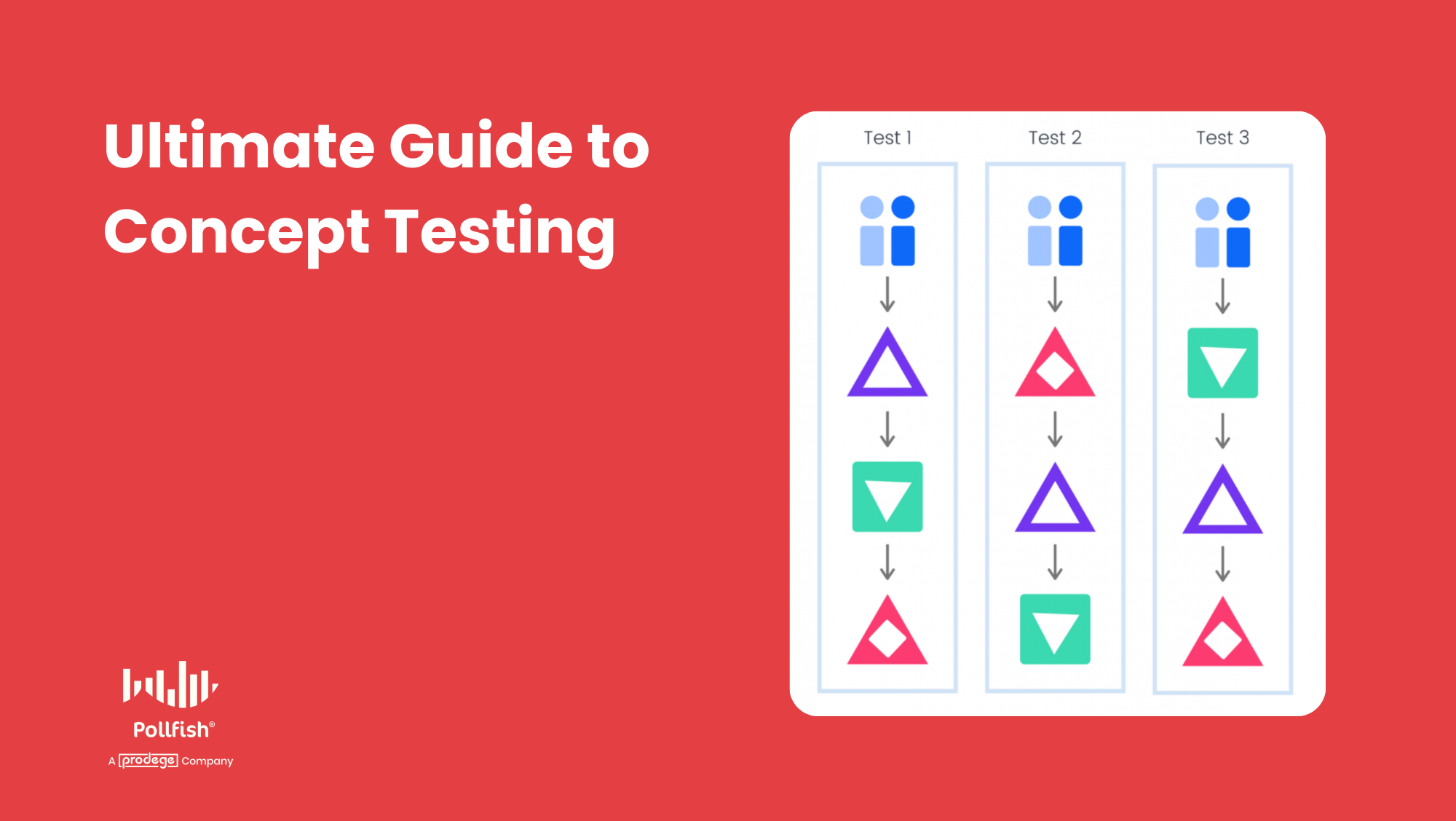
Whether you’re new to concept testing or experienced and just looking for best practices or top providers, this guide covers it all. Feel free to skip to whatever’s most relevant to you:
- What is concept testing?
- What are the key benefits of concept testing?
- Monadic vs. sequential monadic design
- Stimulus options and what to show respondents
- Standard concept testing measures and the “why” behind the questions
- Concept testing sample size
- Top concept testing providers for DIY and full-service
Let’s dive in.
What is Concept Testing ?
At its core, concept testing is about reducing risk. It’s the market research equivalent of test driving a car before you buy it.
You may have ideas for new products, services, marketing campaigns, or messaging and brand positioning.
Instead of spending millions on a full launch or even investing heavily in a prototype, you can spend a fraction of that to see if the idea resonates with your target audience first.
- Pros: Relatively inexpensive way to get a directional read on market acceptance.
- Cons: It’s a simulation, not reality. A great score doesn’t guarantee success, but a poor score is a major red flag that shouldn’t be ignored.
What Are the Benefits of Concept Testing?
There are several key benefits to conducting a concept test:
- Validate Major Investments: Validate that there’s a market for an idea before committing major resources.
- Optimize and Iterate: Identify what’s working (the “why”) and what’s not, allowing you to improve the concept before launch.
- Choose the Winner: Helps prioritize which of several promising ideas has the best chance of success.
- Secure Internal Buy-in: Provides objective data to convince stakeholders and secure funding.
That said, these benefits only hold up if the data behind them is solid. Low-quality audiences or unreliable survey data can undermine the entire process, leaving you with product development insights you can’t trust.
We published a transparent, in-depth guide on the topic: 3 Survey Data Quality Issues Sabotaging Your Research (& How We Fix Them)
Monadic vs. Sequential Monadic Design
There are several concept testing methods, but the two most common are monadic and sequential monadic testing.
An easy way to understand the difference is to think of it like an ice cream tasting.
Monadic Design (The “One Big Scoop” Method)
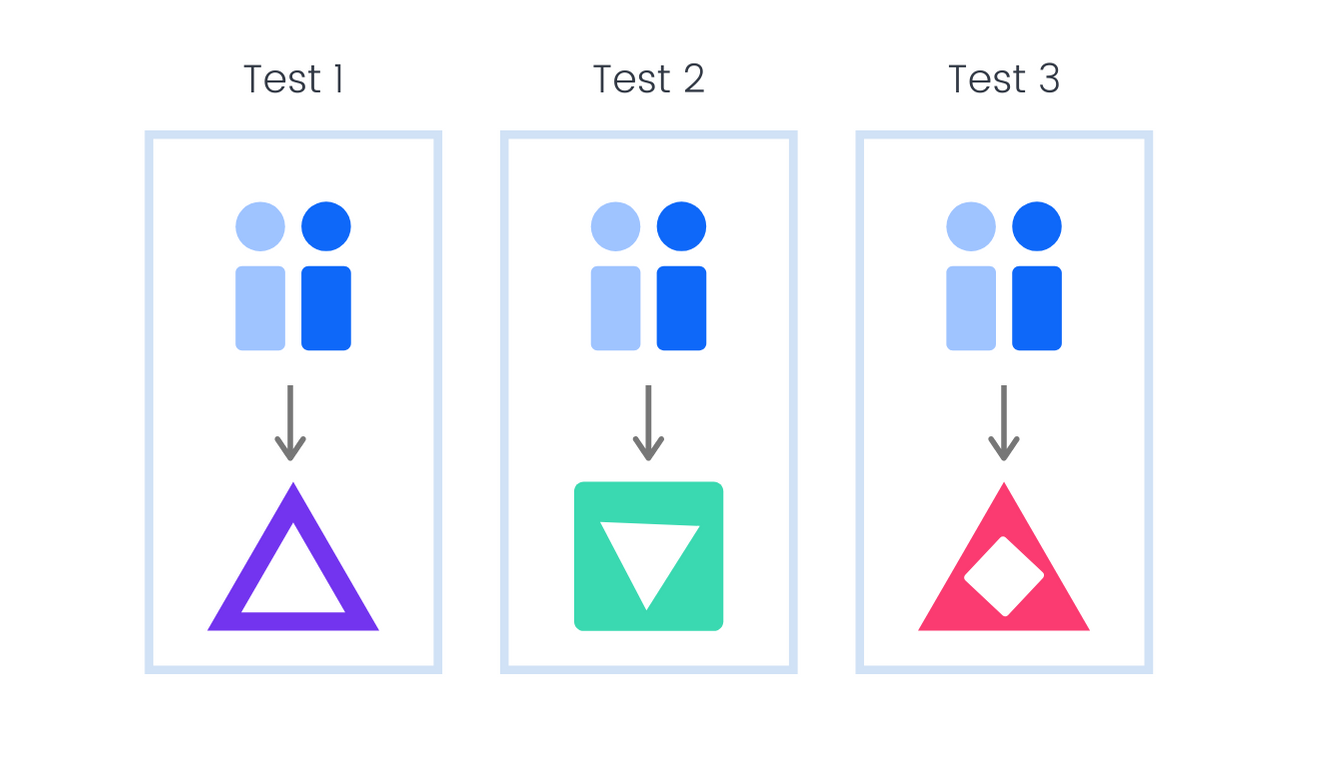
- What it is: Each respondent sees and evaluates only one concept. If you’re testing 3 concepts, you divide the sample into 3 groups, and each group sees one concept.
- When to use it: This is the gold standard. Use it when the decision is high-stakes (e.g., a major product launch), when concepts are similar and could be easily confused, or when you need the cleanest, most unbiased read on each idea.
- Pros: No bias from seeing other concepts. Simulates a real-world scenario where a consumer typically encounters one new product at a time. Shorter, more engaging survey for the respondent.
- Cons: Requires a larger total sample size (and is therefore more expensive).
Sequential Monadic Design (The “Flight of Small Tastes” Method)
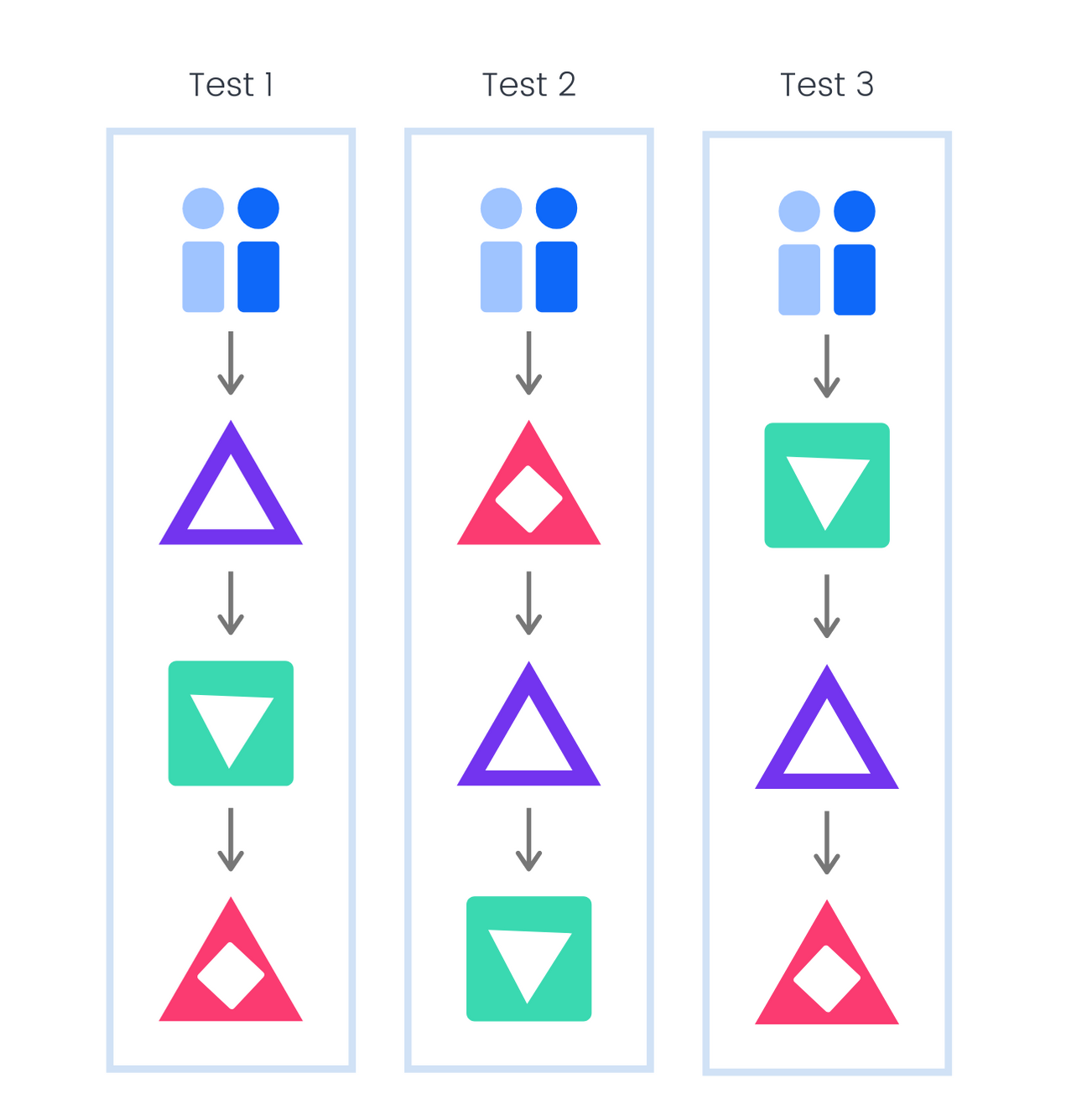
- What it is: Each respondent sees and evaluates multiple concepts, one after the other. (Usually 2-4).
- When to use it: Best for early-stage screening of many distinct ideas, when the budget is tight, or when the goal is to quickly identify a few top performers for later testing.
- Pros: More cost-effective as it requires a smaller total sample size. Good for getting a relative preference (“Which of these did you like most?”).
- Cons: Interaction bias, as seeing the first concept can influence opinions of the second, third, and so on. Respondents can get fatigued. It’s also less realistic.
- Pro tip: We recommend rotating the order in which concepts are shown to mitigate this bias.
Bottom Line: Which One is Best?
There’s no universal right answer, and it depends on your budget and goals.
That said, we generally recommend monadic testing as the best practice for product validation.
Sequential monadic is ideal for early-stage screening, while monadic remains the preferred methodology for high-stakes product decisions where data quality matters most.
Stimulus Options & What to Show Respondents
Before you run a concept test, you need to decide how to present your idea to respondents.
The format you choose, known as the stimulus, can significantly impact the quality of feedback you get.
Below is a breakdown of the most common types and key considerations, based on our experience running Pollfish (our DIY survey tool) and Prodege (our full-service market research offering).
Standard Concept Testing Measures & The “Why” Behind the Questions
There are standard concept testing measures that have been developed over decades by large CPG companies (like P&G) and research firms to create a “common language” for predicting in-market success.
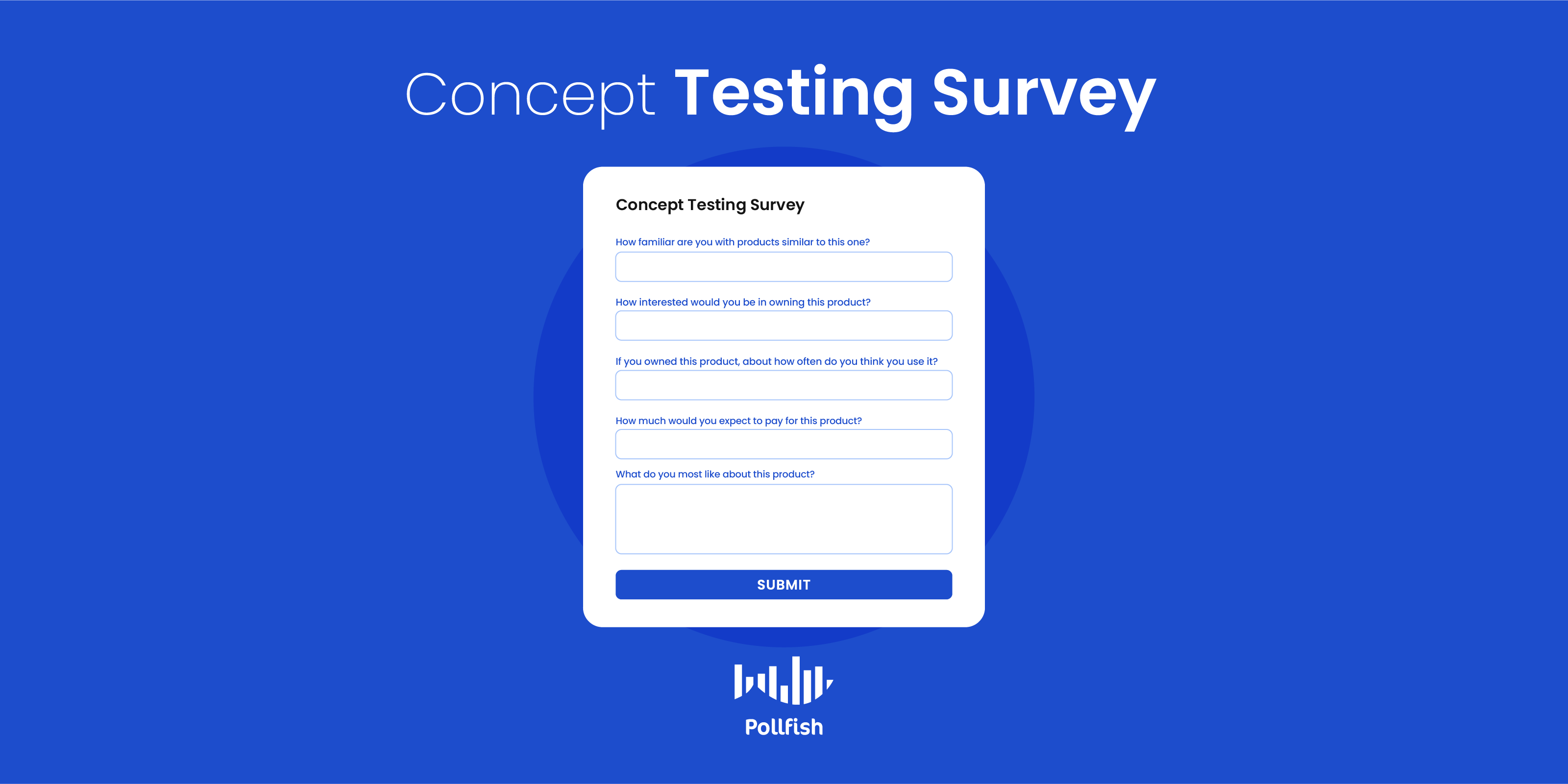
- Purchase Intent (PI): The “money” question. “How likely would you be to buy this product if it were available?” (Usually a 5-point scale from “Definitely would buy” to “Definitely would not buy”). The “Top 2 Box” score (sum of “Definitely” and “Probably” would buy) is the most-watched metric.
- Uniqueness / Differentiation: “How new and different is this product compared to what’s currently available?” This measures whether the idea breaks through the clutter.
- Believability: “How believable are the claims made about this product?” If consumers don’t believe you, they won’t buy.
- Relevance / Need & Desire: “How well does this product meet a need you have?” An idea can be unique and believable, but if no one needs it, it will fail.
You use these measures as a diagnostic toolkit.
They don’t just tell you if a concept is good; they tell you why it’s good. Is it winning on uniqueness? Is it failing on believability?
This is where the actionable insights come from.
Tip: Consider crafting open-ended questions tailored to your specific situation and product development process.
Concept Testing Sample Size: The Art & Science
While there’s no single magic number when determining the right concept testing sample size, here are the general guidelines we recommend:
- The “Rule of Thumb” (Directional Read): n=150-200 per cell (per concept in a Monadic design). This provides a solid directional read and is great for early-stage tests or when budgets are tight.
- The “Gold Standard” (Statistical Confidence): n=300-400 per cell. This is ideal for high-stakes decisions. It allows for more robust statistical analysis and the ability to read results among key subgroups (e.g., men vs. women, younger vs. older).
- Can you go smaller? Yes, for qualitative insights or very niche audiences, a sample of around n=100 can be useful, but be aware that the results are directional, not statistically representative.
- Can you go larger? While a larger sample does increase statistical confidence, you want to find the sweet spot for you. When you work with us, we’ll focus on getting you the right sample size to make a confident decision without overspending.
Best Concept Testing Providers: DIY & Full-Service Options
If you’re looking for a DIY survey option, try our product, Pollfish.
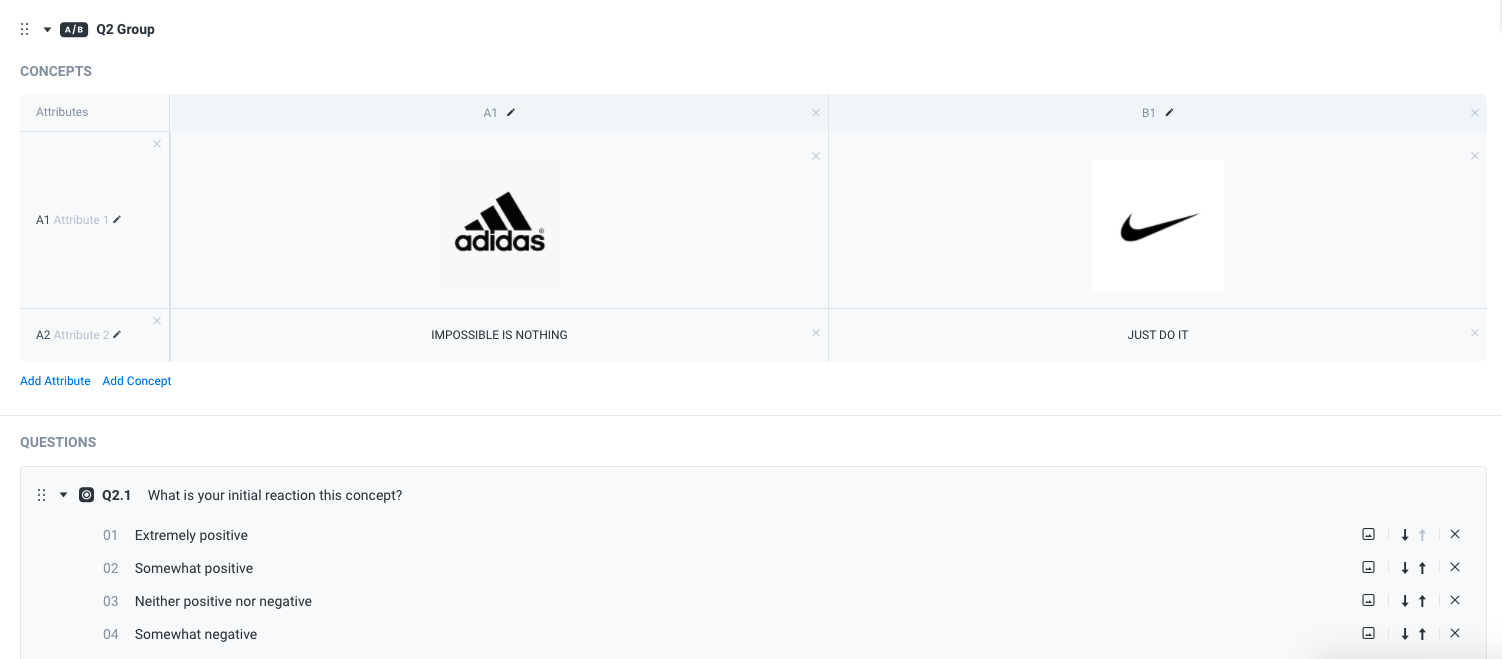
In our article on the 8 Best Concept Testing Platforms, we explore some of the key benefits of our platform, including:
- Robust functionality across 3 key areas: audience targeting, questionnaire design and data analysis
- High-quality audience panels with rigorous data quality standards
- Pay-per-response pricing model with complete transparency and no hidden fees
- Fast turnaround times (from a few hours for broad audiences to a few days for more niche groups)
As several of our customers shared regarding Pollfish’s product concept testing capabilities:
“I am a new client and came in with a very urgent request to set up concept tests and get results to inform strategy with a total 6-day timing for field, clean, analyze and deliver. I think we might be able to pull it off! That meant setting up as a client, learning the Pollfish platform and Insights Builder platform. I can’t believe the client service that has been provided to me over the last 5 days. It has been best in class. I am so thrilled to be working with Susan Stacy, Will and Victoria for holding my hand on this critical project. Extra shout out to Susan and Will for going above and beyond over the weekend to keep me moving along on this project. Massive thanks!”
“Great experience launching the first survey today to quickly get potential user feedback on a new business concept. Pollfish was easy to use & is the fastest method I’ve seen to get actionable insight. Will return!”
“Pollfish is one of the best services I’ve used for market research and concept validation (4 surveys completed so far). It’s simple, results come back extremely quickly and the data presentation is clear and well segmented. The customisation capabilities of surveys are brilliant and the customer service is top notch. Thank you Pollfish.”
“Pollfish is my go-to tool to unlock and discover insights from different types of audiences really quickly. The ease with which the results are presented, their presence in countries where it’s difficult to find information such as Central America and the Caribbean, has allowed me to understand consumers and successfully conduct concept tests.”
If you’re looking for a fully done-for-you service, then Prodege (Pollfish’s parent company) would be a great fit.
For our full-service concept testing offering, here’s what you can expect:
- Discovery Call: We learn your business objectives and research goals.
- Proposal & Study Design: We recommend the best methodology, sample plan, and stimulus format.
- Questionnaire & Concept Review: We partner with you to finalize the survey design and concepts.
- Programming & Testing: We program the survey and conduct rigorous quality checks.
- Fielding: We launch the survey to our high-quality panelists.
- Data Analysis & Reporting: Our expert consultants dig into the data, looking for the story and the “why” behind customer needs and preferences.
- Debrief & Recommendations: We present the findings and provide clear, actionable recommendations for your business.
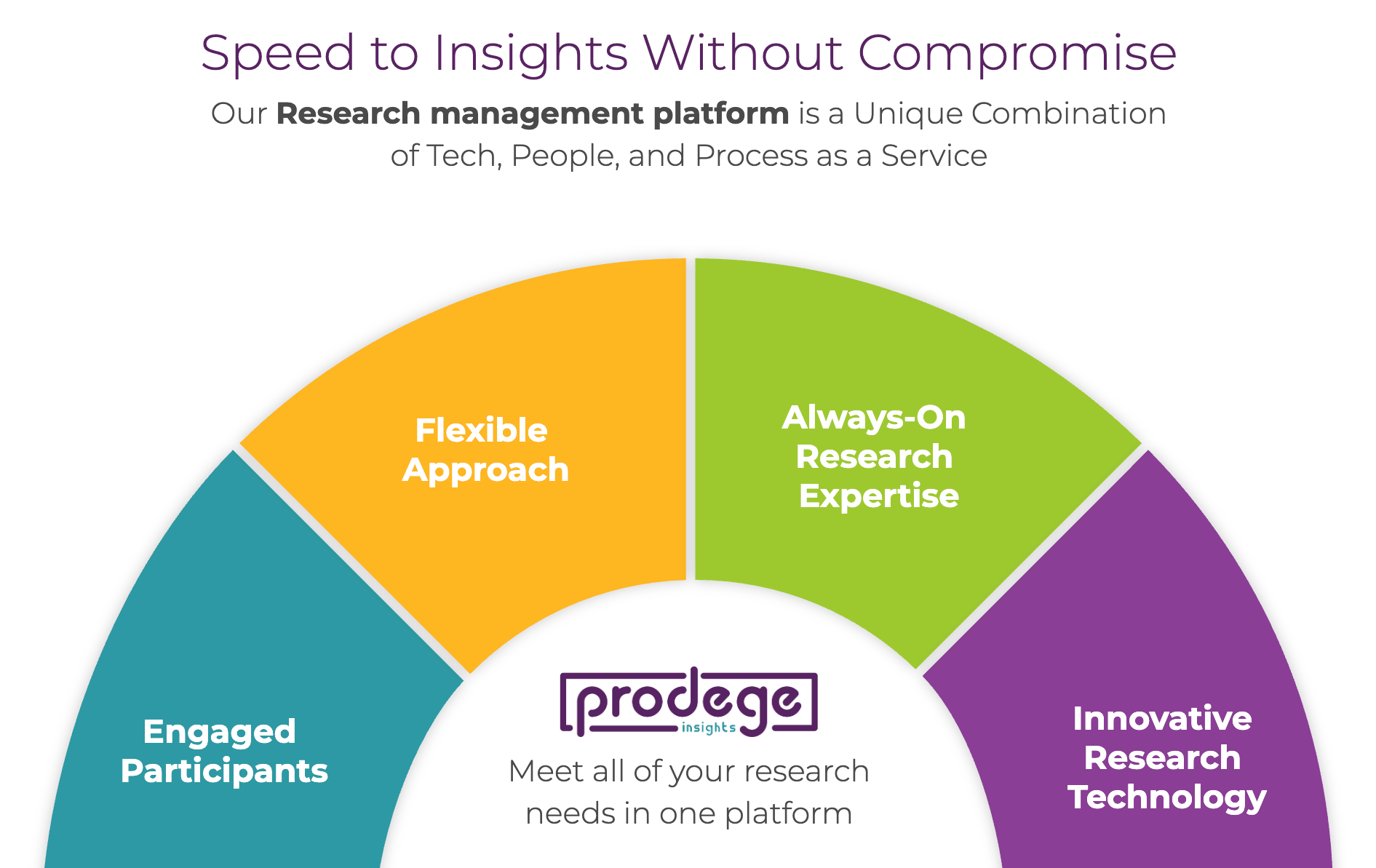
Here’s what differentiates Prodege from other full-service providers and “big-box” competitors:
Learn More About Pollfish and Prodege
- For a DIY survey option, sign up for a free Pollfish account, no credit card required. Our platform makes it easy to launch concept tests via an intuitive user experience. We offer fast turnaround and pay-per-response pricing.
- For a full-service solution, reach out here. Through our parent company Prodege, we can handle your concept testing research end-to-end, or just the specific areas where you need support. We offer both quantitative data and qualitative research services, including focus groups, IDIs, usability testing, and more.
