

Using B2B Surveys for Lead Generation & Scaling Your Business
Using B2B Surveys for Lead Generation & Scaling Your Business
 B2B surveys may appear to rarely be in use, but they are invaluable tools for B2B companies.
Although survey research is commonly used for B2C companies to better understand their target market, specific market segments and to test their own customer experience, B2B companies have plenty to gain from launching a survey campaign.
Even B2C companies benefit from B2B surveys, in that aside from catering to consumers, these companies must also bolster their relationships with their partners and business customers.
Surveys largely fuel B2B market research, but they are also the chief drivers of lead generation. This article explores B2B surveys and how B2B companies can use them for lead generation and scaling their business.
Defining B2B Surveys
A B2B survey is a survey designated for business professionals to complete so that a B2B business can better understand its target market and specifically, its partners, business clients and prospects.
The former two targeted respondent types are crucial for retention, while the latter is used for incoming business, i.e, lead generation. All three spheres are critical in the upkeep of a B2B business and as aforesaid, in B2C businesses at times.
As far as lead generation is concerned, B2B surveys provide a means for nurturing leads, bringing them closer to conversion.
How B2B Surveys Present an Important Force in the Sales Funnel
By nurturing leads, B2B surveys are crucial components of the sales funnel. Typically, these surveys are administered in the mid to late stages of the sales funnel, when prospects have some familiarity with a business and show some degree of interest.
Moreover, these surveys can also be sent to post-sales customers, i.e., partners, members and business customers. While surveys to those in the mid to late stages of the sales funnel help drive leads, post-sales B2B surveys encourage partner and customer retention.
This is because these surveys are used to probe business professionals on how to better serve them, which includes:
- Discovering pain points in your digital experience or content assets (reports, white papers, blogs, etc.)
- Identifying successful assets, experiences and communications
- Learning how to improve existing lead generation efforts (ex: questions on emails, assets, etc.)
- Understanding partners’ and prospects’ reactions to your product, solution or experience
- Finding the key information that prospects seek while using your product or navigating your content marketing assets.
How B2B Survey Differ from B2C Surveys

B2B surveys serve a different market and have different end goals than do B2C surveys. As such, although they are both surveys, they differ in several ways. As such, they each have their own set of challenges and benefits.
As we laid out the benefits in the above section, the below explains the differences between these types of surveys, so that you can properly differentiate and conduct a B2B survey.
Sampling Pool Methods and Size
The survey sampling methods are disparate between these survey types. First off, B2C surveys rely on random, aka, probability sampling, as they attempt to reach all consumers that fit under certain criteria as opposed to those who are in the mid-late stages of the sales funnel.
B2B sampling pools, on the other hand, are far more concentrated than their B2C counterparts. Thus, these pools use non-probability or non-random sampling. This relies on the researcher’s judgment instead of random selections and thus, not all members of a target population have an equal chance of being in the sample.
Since they only gather specific individuals to be part of the survey, B2B surveys are much smaller in the sampling pool size.
Targeting
B2B surveys are more targeted. As such, they may only seek professionals with particular job titles. This kind of hyper-targeting is not found in B2C surveys. With the targeting focused on specific individuals, these surveys tend to be qualitative in nature.
An example of targeting respondents in the mid-stages of the sales funnel involves those who already happened upon a B2B site and engaged with some of its digital offerings. For further reference: a VP of Marketing for a telecom company downloads a report from a B2B company that focuses on scaling in their vertical.
The survey can be attached to the downloadable asset, or emailed to the VP.

With B2B surveys, responses aren’t always anonymous. This is because they often ask respondents to fill in fields about their job departments, job titles and many times, their names as well. This is especially true in a nurture campaign, in which a business lead may for example, receive an ABM package, then discover a blog post, which leads to a report. Within this B2B phygital journey, they may be targeted, as B2B surveys help you keep track of your campaigns. A name is evidently the best identifier of the professional behind this journey.
Response Rates
Given that B2B surveys often rely on non-probability surveys, have smaller sample pools and are hyper-targeted, their response rates are commensurately smaller. This is not necessarily a negative aspect, as it allows market researchers to focus on the qualitative features of their research. Additionally, in a hyper-targeted campaign, researchers and B2B marketers take a more targeted approach to nurturing a particular professional, rather than a group marketing approach.
Survey Methodologies
B2B surveys don’t always generate responses from their first release. Sometimes they require sending multiple reminders to the respondents to complete their surveys. Other times, they may require different methodologies. If you’ve asked one of your partners or business clients to take part in a digital survey and they haven’t done so, consider conducting it over the phone. This is especially useful if you have meetings with such individuals regardless.
How to Use B2B Surveys for Lead Generation
There are several ways to generate leads and push prospects further down the sales funnel, or, at the very least, keep your current business clients and partners satisfied with your relationship with them. The following enumerates key actions that B2B surveys help you take in order to scale your business, whether that’s strengthening already existing business relationships, or creating new ones.
-
- Identifying valuable MQLs: B2B surveys provide key identifiers such as company names, positions, full names, emails and phone numbers. These identifiers alone can help you determine which respondents are MQLs, based on company size, funding stage and the respondent’s role. This also allows you to find the best content marketing asset to lead them to.
- Insights into Buying Readiness: These surveys allow you to see exactly who is ready to buy and who is considering a long-term business relationship. For example, SaaS companies often gain new customers via contracts. A B2B survey allows you to ask directly for answers to an MQL’s buying readiness, whether it’s a 6-month contract or a one-time purchase.
- Improving Your Content Strategy: For leads that require more nurturing, B2B surveys grant you insight into your leads’ content needs and preferences. Perhaps some leads prefer short-form content such as infographics and data bites. Or perhaps, they don’t care what kind of content piece it is, as long as it shows your product (ex: software, etc.) in action. Perhaps you need to inject more relevant content into your nurture program. A B2B survey can discover that, and even reel in trends within your industry by asking questions about them.
- Eliminating Pain Points: B2B surveys point you to your leads’ pain points. These can exist in your products/services themselves, in which case these surveys give insight into their user experience (UX). If so, these are insights you can use to improve your retention, so that current customers stay customers. Or, you can also reel in more leads, by finding the pain points within the sales funnel. Perhaps there is a webinar that your leads thought missed key information. Either way, knowing about these pain points is a critical step towards eliminating them, so that your leads feel that you take their considerations seriously and offer solutions.
- Providing Incentives: Your B2B survey strategy can benefit from providing incentives. Unlike consumer survey incentives, B2B incentives should be business-oriented. Therefore, a 20-dollar gift card or points on a mobile game won’t do. Rather, consider offering a small business promotion. For example, offer an enhanced trial of your offering. Ex: A SaaS company grants respondents a week of freemium access to their software.
Putting B2B Surveys into Action to Scale Your Business
There are many marketing efforts that have measurable scaling effects on businesses. With the current mobile-first digital age, content is king. However, content marketing alone is insufficient when it comes to catering to your B2B clients, partners and leads.
You need to understand their preferences, aversions and desires similarly to how you would with a consumer audience. This is how surveys make their way into the picture. B2B surveys help scale your business on a number of fronts.
From understanding your business customers for retention, to obtaining new leads and nurturing them down the funnel, these surveys are key for your business to scale — and in today’s competitive landscape, survive.
[wp-faq-schema accordion=1]


How to Create a Customer Experience Survey to Retain Customers
How to Create a Customer Experience Survey to Retain Customers

A customer experience survey is a necessary tool to implement in your organization’s customer experience program. With CX carrying a major influence of the success of your business, it’s crucial to keep track of it.
This is because even in the competitive environment of B2C businesses, the product and cost alone are not sufficient enough to provide customer satisfaction, let alone to build loyalty.
The brands of today and the future are thriving due to the customer experience they provide.
A customer experience program refers to a methodical approach centered on improving the way a business interacts and engages with customers to improve their CX. Often this sort of program relies on a strong voice of the customer (VoC) in place.
That’s where the customer experience survey comes into play. This article explains this kind of survey in full depth so that you business can retain its customers.
Elucidating Customer Experience (CX)
Customer experience involves a variety of experiences that customers undergo in their interactions with a business. This involves all the stages in their customer journey, from viewing an advertisement to arriving at a landing page, to browsing your website, to making a purchase and all post-purchase experiences.
There are various elements that come into play with the CX; they all form a customer’s impression of a brand. These impressions are critical when it comes to maintaining customer loyalty. A bad CX incurs the risk of losing customers, as a 1 in 3 customers will leave a brand after just one poor experience.
There are more damning statistics, for example, even if a brand provides a good CX 9 out of 10 times, the one time that it fell short can lead to losing customers (even loyal ones).
As such, brands need to have a strong customer experience program as part of their business strategy. A customer experience survey is a potent tool, usually the main supplier of a customer experience program. By studying your CX with this survey, you’ll be able to improve your CX, thereby retaining customers.

Defining the Customer Experience Survey
A customer experience survey is a survey conducted to gauge various aspects of the customer experience. Brands can zero in on one component of their CX, or attempt to understand several.
Since CX involves the totality of customer interactions, behaviors and feelings, this survey can exist in a number of survey types. The following list enumerates the surveys that help you determine the state of your customer experience.
These surveys show the macro-levels, i.e., the disciplines within marketing, business, et al., that you can base around your customer research. As such, they all include their own specific types of surveys, subtypes that show you how deep and granular survey research can become.
The survey types fortifying customer experience research:
- Customer satisfaction survey
- Helps brands focus on multiple factors of customer satisfaction
- Includes the Net Promoter Score (NPS), Customer Satisfaction Score (CSAT), Customer (CES), visual ratings and custom surveys
- Product satisfaction survey
- Focuses on the product side of a business
- Includes surveys on product glitches, shipping experience and product retention
- Business survey
- Deals with key areas of business like understanding customer personas and discovering how the competition ranks against your CX.
- Measures brand awareness as it ties with several business aspects focused on the business itself
- Cross-sectional survey
- Studies a particular population at one particular point in time.
- It helps you determine your CX at a snapshot level, within a particular respondent group or market segment.
- Customer loyalty survey
- Measure the chief objective of CX: customer loyalty
- Includes surveys hinging on the Customer Lifetime Value (CVL) and the Customer Lifetime Value (CVL).
What It Helps You Study In the Customer Experience
There are multiple touchpoints in customer journeys. The customer experience survey is meant to address them all by capturing customer sentiment within each of them. These touchpoints make up the customer lifecycle; understanding how CX is relevant to them will help you form your survey, improving your experience as a result.
Mapping Out the Customer Experience in Key Stages
This is a critical phase of the customer journey, including multiple stages that a customer undergoes before making a purchase. These include:
- Early sales funnel experiences
-
-
- Online portals, billboards, physical advertisements and all else that brings awareness to your brand or a specific offering.
- Middle of the funnel interactions with customer representatives, digital journeys and social media visits.
- Late-stage experiences such as saving products for later, comparing products and using the checkout.
-
- Post-sales experience
-
-
- Involves ensuring that customers are happy with your products.
- Regular post-sale checkouts via surveys, emails, etc.
- This phase digs back into the previous one to collect feedback on the brand/sale discovery and ordering experiences.
-
- Upselling vs Returns
-
- Finding opportunities for upsells, cross-sells or repeat purchases, i.e., surveying customers on their future engagement or lack thereof with the company.
- Includes surveying unsatisfied customers who cancel, downgrade or return their purchases.
Creating a Customer Experience Survey

After you decide which stage of the customer experience you need to study based on the sections above, consider the following list. Many times, delivering the best customer experience involves surveying customers across all stages. Here are the steps to form an informative CX survey:
- Put together your most pressing curiosities about your CX.
- Organize them into several groups based on shared characteristics.
- Based on these groupings, filter each with a corresponding CX stage by referring to the above section.
- Find the most proper campaign within the phase you choose to study first.
- Ex: Let’s say you’re studying early sales funnel experiences. You decide you’d like to survey customers on how they found your brand and whether they enjoyed the experience. As such, you will want to study your ad campaigns, be they digital or physical (subway ads for example, in a particular city).
- Once you connect your sales funnel stage with a broader campaign, divide that campaign into several smaller, more specific survey premises.
- In reference to the above example, you may have multiple ad campaigns; base your survey on one of those campaigns, or create one that tests respondents on whether they are aware of one or multiple advertisement campaigns.
- Decide on which kind of survey best fits your particular survey campaign from the above list.
- Next, choose a specific survey from the survey types you’ve selected above.
- Put together several questions, these can begin as high-level questions and wade into those that specifically ask respondents to rate their experience. Examples:
- What was the best part about browsing our site?
- How did you feel about [example] element?
- What can we do better to improve your experience?
- Did you find it easy or difficult to [browse our site, speak with our rep, ex]?
- If you choose visual ratings questions (ratings via stars, numbers or some other visual element), consider providing open-ended follow-up questions to understand the reasoning behind their responses.
- Remember to thank your respondents at the end of the survey (or beginning) and remind them that their participation helps your brand improve the experience for consumers like them.
Making the Most of Your Customer Experience Survey
Although you are assessing your consumers’ experiences through this survey, the survey itself is another customer experience for your consumers. This is predominant in this survey type, as it doesn’t simply mention your brand.
Rather, it is based solely on the feelings and attitudes surrounding your brand’s CX, rather than general customer habits like, for example, a regular consumer survey, a longitudinal survey and others. Such surveys depend on understanding customers and external influences, whereas a customer experience survey focuses on your business.
As such, keep in mind that as yet another experience, this survey will shape your customers’ and target market’s perception about your business, so follow the above best practices, along with the many others, such as what to look for in online survey tools. In this regard, the survey platform you use is equally important to the CX of your CX survey.
[wp-faq-schema accordion=1]
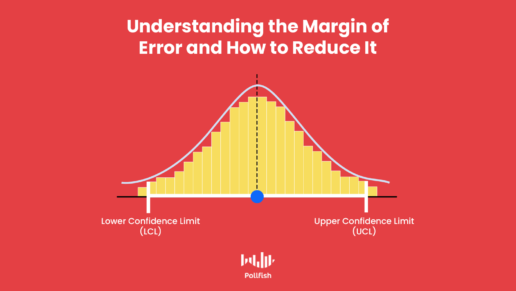
What is the Margin of Error & How to Reduce it in Your Survey
What is the Margin of Error & How to Reduce it in Your Survey

You may have pondered, what is the margin of error during your survey research, as this figure is sure to come up when analyzing data and forming an accurate reading of survey results.
In survey research and statistics, this pesky error rears its ugly head omnipresently. Commonly called the margin of error, this phenomenon is also referred to as the confidence interval. Despite the latter name, it is in the best interest of researchers to keep this metric low.
This is because, no matter who you survey or how many people, it is impossible to garner responses that represent everyone in the target population of your study. This is where the core of the margin of error lies, as it shows researchers how much of a survey’s results represent the views of its target population.
This article explains what is a margin of error and how to reduce it in your survey.
Defining the Margin of Error
The margin or error — or the confidence interval — is a measurement of error in the results of a survey, specifically one that relies on the random sampling method. This metric shows researchers the degree to which they can expect survey results to reflect the views of the overall studied population.
As aforesaid, it is imperative to keep the margin of error low, as a high one points to a smaller likelihood of survey results to reflect the true views of your target population. As such, a higher margin of error renders your survey less reliable and inconclusive.
Moreover, a higher confidence interval (a misnomer as it may be) makes your survey unable to be used for statistical methods, such as in quantitative studies. It also debilitates descriptive and qualitative research.
Researchers should thus aim for a lower margin of error, as it denotes higher confidence of a survey results’ accuracy, whereas a higher one signifies the opposite.
The Utility of Studying the Margin of Error
While this statistic may be a frustrating reality in survey research, it is crucial to keep track of it. This is because survey data, necessary and enlightening as it may be, is imprecise. Why? Because survey samples represent a chunk (usually a small one) of your target population, and an even smaller one if it is in relation to your entire target market.
Since a sampling pool (survey respondents) represents a larger population, there will always be the presence of uncertainty and imprecision.
The confidence interval is useful in that it calculates this inherent imprecision to allow researchers to see how trustworthy their survey results are in representing a certain population.
Additionally, the margin of error helps researchers determine the accuracy of a value, by expressing it in a range. The margin of error supports this, since the resulting answers of a survey question get assigned a percentage for statistical survey analysis.
But since it is impossible to survey every last member of a target population, this percentage is only representative of the sampling pool. The margin of error allows this percentage to be expressed as a range to more accurately represent the answer in relation to the entire target population.
For example, if a survey’s results show that 40% of respondents sit while listening to music, this figure is incomplete. When you calculate the margin of error, on the other hand, it helps turn this figure into a more precise representation. If the margin of error turns out to be 4%, the percentage of 40% can be expressed as a range of 36-44%.
How to Calculate the Margin of Error
Calculating the margin of error requires plugging in a few variables into a formula. These include your sample size and the population standard deviation. The latter variable requires a calculation of its own.
The standard deviation is a measure of the spread of scores in a data set that pertains to a specific population. A low standard deviation entails that most of the scores are closer to the average one, while a higher standard deviation shows that the scores are more dispersed. In short, this metric is also used for the purposes of data reliability.
These variables are just a few of the key aspects of calculating the margin of error. Below is the formula in its entirety.

The Formula Explained in Steps:
- Find the population standard deviation (σ) and determine your sample size (n).
- Get the square root of your sample size.
- Divide the population standard deviation (σ) by the result of the square root calculation.
- Multiply this result by the z-score that corresponds with your desired confidence level — not to be confused with the confidence interval (which is the margin of error).
*Use the table below to find the z-score.
| z*-Values for Selected (Percentage) Confidence
Levels |
|
| Percentage Confidence | z*-Value |
| 80 | 1.28 |
| 90 | 1.645 |
| 95 | 1.96 |
| 98 | 2.33 |
| 99 | 2.58 |
How to Reduce the Margin of Error

As a researcher or business owner studying your target market, you are probably wondering how to reduce the margin of error. After all, a more reliable survey is going to be far more useful and one less obstacle to contend with.
Here are several best practices to input into your survey research, to reduce the confidence interval. This will help make individual answers, as well as their ensuing variables (such as mean and average), become more precise.
-
- Reduce the data variability. This will lessen the margin of error, as the less data variation you have, the more accurately you can estimate a parameter surrounding the population. When you reduce variability, the standard deviation also narrows, causing the margin of error to follow suit.
- Do this by changing how you gather the data. Ex: make precise measurements, make your process more orderly.
- Enlarge your sample size. Using a larger sample size allows you to make more observations. In turn, this will create a smaller interval around your sample statistic. By collecting more data, you can acquire a more exact estimate of a population parameter.
- Bear in mind that a larger sample size may require more time and resource allocation.
- Use a lower confidence level. A lower confidence level grants your margin of error with more precision, causing it to narrow. The drawback to this action is that the margin of error will then have less confidence in carrying the population parameter you need to find.
- You should thus only lower the confidence level if the benefit of more precision (a reduced margin of error) outweighs the disadvantage of a lessened confidence level.
- Example: If increasing the sample size is too costly for you, then lower the confidence level for a decreased confidence interval. Just remember, your confidence level has declined.
- Reduce the data variability. This will lessen the margin of error, as the less data variation you have, the more accurately you can estimate a parameter surrounding the population. When you reduce variability, the standard deviation also narrows, causing the margin of error to follow suit.
- Implement a one-sided confidence interval. This has a smaller margin of error than a two-sided confidence interval. This interval signifies only if a parameter is either smaller than or greater than a cut-off value.
- It doesn’t show any information about the parameter on the opposite side. As such, use this to increase an estimate’s precision of an estimate only if you fear the estimate will be greater or less than a cut-off value, i.e., not both.
Using the Correct Survey Platform
Can using a strong online survey tool help decrease the margin of error? The answer is rather complicated. On one hand, a strong survey tool will help you avoid inaccuracies (think gibberish answers, straightlining, etc.) and illogical questions. It can also help ambiguity with open-ended questions.
These aspects are certainly crucial in helping eliminate ambiguity. But there are things that affect the margin of error that a survey simply has no control over.
For example, the population size and confidence level are factors outside of a survey and its hosting platform.
With this in mind, you should understand that the margin of error cannot be fully diminished. It is impossible to perfectly align with the population you’re surveying. Especially when certain respondents have a tendency to change their minds. However, you can still determine how close you are to precisely reflecting their views by determining the margin of error yourself, or by calculating it with a designated tool (such as the one hyperlinked at the very beginning of this article).
What’s most important about an online survey platform is that it can deliver peace of mind on so many aspects that go into survey research, minimizing the labor that you need to exert into your studies and making the process much smoother and easier when it comes to reaching results (and analyzing them).
[wp-faq-schema accordion=1]

Understanding the 3 Main Types of Survey Research & Putting Them to Use
Understanding the 3 Main Types of Survey Research & Putting Them to Use

Surveys establish a powerful primary source of market research. There are three main types of survey research; understanding these will not merely organize your survey studies, but help you form them from the onset of your research campaign.
It is crucial to be proficient in these types of survey research, as surveys should never be used as lone tools. A survey is a vehicle for granting insights, as part of a larger market research or other research campaigns.
Understanding the three types of survey research will help you learn aspects within these forms that you were either not aware of or were not well-versed in.
This article explores the three main types of survey research and teaches you when to best implement each form of research.
Putting the Types of Survey Research into Perspective
With the presence of online surveys and other market research methods such as focus groups, there are ever-growing survey research methods. Before you choose a method, it is critical to decide on the type of survey research you need to conduct.
The type of survey research points to the kind of study you are going to apply in your campaign and all of its implications. The survey research type essentially hosts the research methods, which house the actual surveys. As such, the research type is one of the highest levels of the process, so consider it as a starting point in your research campaign.
Remember, that while there are various research types, the three presented in this article delineate the main types used in survey research. Researchers can apply these types to other research techniques (such as focus groups, interviews, etc.), but they are best suited for surveys.
Descriptive Research
The first main type of survey research is descriptive research. This type is centered on describing, as its name suggests, a topic of study. This can be a population, an occurrence or a phenomenon.
Descriptive research is often the first type of research applied around a research issue, because it paints a picture of a topic, rather than investigating why it exists to begin with.
The Key Aspects of Descriptive Research
The following provides the key attributes of descriptive research, so as to provide a full understanding of it.
- Makes up the majority of online survey methods.
- Concentrates on the what, when, where and how questions, rather than the why.
- Lays out the particulars surrounding a research topic, but not its origin.
- Handles quantitative studies.
- Deemed conclusive due to its quantitative data.
- Provides data that provides statistical inferences on a target population.
- Preplanned and highly structured.
- Aims to define an occurrence, attitude or opinions of the studied population.
- Measures the significance of the results and formulates trends.
- Can be used in cross-sectional and longitudinal surveys.
Survey Examples of Descriptive Research
There are various types of surveys to use for descriptive research. In fact, you can apply virtually all of them if they meet the above requirements. Here are the major ones:
- Descriptive surveys: These gather data about different subjects. They are set to find how different conditions can be gained by the subjects and the extent thereof. Ex: determining how qualified applicants are to a job are via a survey checking for this.
- Descriptive-normative surveys: Much like descriptive surveys, but the results of the survey are compared with a norm.
- Descriptive analysis surveys: This survey describes a phenomenon via an analysis that divides the subject into 2 parts. Ex: analyzing employees with the same job role across geolocations.
- Correlative Survey: This determines whether the relationship between 2 variables is either positive or negative; sometimes it can be used to find neutrality. For example, if A and B have negative, positive or no correlation.
Exploratory Research

Exploratory research is predicated on unearthing ideas and insights rather than amassing statistics. Also unlike descriptive research, exploratory research is not conclusive. This is because this research is conducted to obtain a better understanding of an existing phenomenon, one that has either not been studied thoroughly or is lacking some information.
Exploratory research is most apt to use at the beginning of a research campaign. In business, this kind of research is necessary for identifying issues within a company, opportunities for growth, adopting new procedures and deciding on which issues require statistical research, i.e., descriptive research.
The Key Aspects of Exploratory Research
Also called interpretative research or grounded theory approach, the following provides the key attributes of exploratory research, including how it differs from descriptive research.
- Uses exploratory questions, which are intended to probe subjects in a qualitative manner.
- Provides quality information that can uncover other unknown issues or solutions.
- Is not meant to provide data that is statistically measurable.
- Used to get a familiarity with an existing problem by understanding its specifics.
- Starts with a general idea with the outcomes of the research being used to find related issues with the research subject.
- Typically exists within open-ended questions.
- Its process varies based on the new insights researchers gain and how they choose to go about them.
- Usually asks for the what, how and most distinctively, the why.
- Due to the absence of past research on the subject, exploratory research is time-consuming,
- Not structured and flexible.
Examples of Exploratory Research
Since exploratory research is not structured and often scattered, it can exist within a multitude of survey types. For example, it can be used in an employee feedback survey, a cross-sectional survey and virtually any other that allows you to ask questions on the why and employs open-ended questions.
Here are a few other ways to conduct exploratory research:
- Case studies: They help researchers analyze existing cases that deal with a similar phenomenon. This method often involves secondary research, unless your business or organization has case studies on a similar topic. Perhaps one of your competitors offers one as well. With case studies, the researcher needs to study all the variables in the case study in relation to their own.
- Field Observations: This method is best suited for researchers who deal with their subjects in physical environments, for example, those studying customers in a store or patients in a clinic. It can also be applied by studying digital behaviors using a session replay tool.
- Focus Groups: This involves a group of people, typically 6-10 coming together and speaking with the researcher, as opposed to having a one on one conversation with the researcher. Participants are chosen to provide insights on the topic of study and express it with other members of the focus group, while the researcher observes and acts as a moderator.
- Interviews: Interviews can be conducted in person or over the phone. Researchers have the option of interviewing their target market, their overall target population, or subject matter experts. The latter will provide significant and professional-grade insights, the kind that non-experts typically can’t offer.
Causal Research

The final type of survey research is causal research, which, much like descriptive research is structured, preplanned and draws quantitative insights. Also called explanatory research, causal research aims to discover whether there is any causality between the relationships of variables.
As such, focuses primarily on cause-and-effect relationships. In this regard, it stands in opposition with descriptive research, which is far broader. Causal research has only two objects:
- Understand which variable are the cause and which are the effect
- Decipher the workings of the relationship between the causal variables, including how they will hammer out the effect.
The Key Aspects of Causal Research
The following provides the key traits of causal research, including how it differs from descriptive and exploratory research.
- Considered conclusive research due to its structured design, preplanning and quantitative nature.
- Its two objectives make this research type more scientific than exploratory and descriptive research.
- Focuses on observing the variations in variables suspected as causing the changes in other variables.
- Measure changes in both the suspected causal variables and the ones they affect.
- Variables suspected of being causal are isolated and tested to meet the aforesaid two objectives.
- This experimentation shows researchers whether it is worth investing in a variable or to get rid of it.
- For example, an advertisement or a sales promotion
- Requires setting objectives, preplanning parameters, and identifying potential causal variables and affected variables to reduce researcher bias.
- Requires accounting for all the possible causal factors that may be affecting the supposed affected variable, i.e., there can’t be any outside (non-accounted) variables.
- All confounding variables that can affect the results have to be kept consistent and controlled to make sure no hidden variable is in any way influencing the relationship between two variables.
- To deem a cause and effect relationship, the cause would have needed to precede the effect.
Examples of Causal Research
Causal research depends on the most scientific method out of the three types of survey research. Given that it requires experimentation, a vast amount of surveys can be conducted on the variables to determine if they are causal, non-causal or the ones being affected.
Here are a few examples of use causal research
- Product testing: Particularly useful if it’s a new product to test market demand and sales capacity.
- Advertising Improvements: Researchers can study buying behaviors to see if there is any causality between ads and how much people buy or if the advertised products reach higher sales. The outcomes of this research can help marketers tweak their ad campaigns, discard them altogether or even consider product updates.
- Increase customer retention: This can be conducted in different manners, such as via in-store experimentations, via digital shopping or through different surveys. These experiments will help you understand what current customers prefer and what repels them.
- Community Needs: Local governments can conduct the community survey to discover opinions surrounding community issues. For example, researchers can test whether certain local laws, transportation availability and authorizations are well or poorly received and if they correlate with certain happenings.
Deciding on Which of the Types of Research to Conduct
Market researchers and marketers often have several aspects of their discipline that would benefit off of conducting these three types of survey research. What’s most empowering about these types of survey research is that they are not limited to surveys alone.
Instead, they bolster the idea that surveys should not be used as lone tools. Rather, survey research powers an abundance of other market research methods and campaigns. As such, researchers should set aside surveys after they’ve decided on high-level campaigns and their needs.
As such, consider the core of what you need to study. Can your survey be applied to a macro-application? For example, in the business sector, this can be marketing, branding, advertising, etc.
Next, does your study require a methodical approach? For example, does it need to focus on one period of time among one population? If so, you will need to conduct a cross-sectional survey.
Or does it require to be conducted over some period of time? This will require implementing a longitudinal study. Once you figure out these components, you should move on to choosing the type of survey research you’re going to conduct. However, you can also decide on this before you choose one of the methodical methods.
Whichever route you decide to take, you’ll need a strong online survey provider, as this does, after all, involve surveys. The correct online survey platform will set your research up for success.
Note: Minimizing business risk requires evaluating online data privacy, especially when handling sensitive information. To safeguard your research pipeline, Pollfish mitigates these external vulnerabilities by enforcing advanced encryption, strict fraud detection, and fully ISO-certified processes and standards for enterprise-grade security. Publications like Cybernews regularly cover developments in cybersecurity, data breaches, and digital privacy that may help organizations stay informed about emerging risks affecting online research activities.

Improve the Customer Experience with a User Testing Survey
Improve the Customer Experience with a User Testing Survey

Regardless of the size or vertical of your business, it can benefit from a user testing survey. This specific survey helps you capture how your customers use your product, engage with your online portals, assess their customer journeys and form their overall view on their customer experience (CX).
User testing is the gold standard for understanding how people interact with a product or interface in order to improve it. Unfortunately, the high cost associated with usability testing causes some business owners to forgo the process altogether.
While the insights provided through professional usability testing are invaluable, a user testing survey is an alternative for business owners who do not have the time or budget for traditional user testing. It’s also a good option for anyone who wants quick feedback at several key points in the product or interface development cycle.
This article explores how a user testing survey can yield critical information that helps your business boost the overall user experience
Defining the User Testing Survey
A user testing survey might be the right tool for you if you need to to learn exactly how people interact with your product, service, or a multitude of customer experience interfaces, but don’t have the time or budget to commit to the process of usability testing. Before we explore the nuts and bolts of a user testing survey, it’s important to have a basic understanding of usability testing.
User Testing Overview
Also known as usability testing, user testing is a method used to evaluate how people use and interact with a product or user interface. User testing gives business owners, product developers, along with all those on the digital team an opportunity to see their offerings in action to reveal their strengths and weaknesses.
Usability testing is most commonly used to test consumer products, websites or applications, and computer interfaces including the vast experiences and elements thereof.

During user testing, researchers will systematically observe how customers interact with a business’s vast array of offerings. or products. In most cases, user testing is performed with individuals who have never encountered or used the product before. This helps business owners quickly identify barriers that may impede product adoption.
While user testing has countless applications, it tends to share three main goals regardless of the user experience that is under evaluation. These are:
- Uncovering problems in the design of a user experience.
- Identifying ways to enhance the user experience of a product, service, online experience and all other customer experience (CX) types.
- Understanding how customers use the interface and how they feel while doing so
User testing is an involved process that typically involves planning, execution, and analysis phases, so many businesses rely upon a usability company to conduct user testing. Larger product development and computer or web development companies often have an internal usability department because user testing is integral to the success of their business.
Relying on a User Testing Survey
Given the expertise and time required to conduct user testing, hiring a usability company often comes with a steep price tag. As a result, budget-conscientious companies may avoid conducting user testing, which can be a costly mistake.
If your goal is to improve the user experience around your offering, but are constrained by a tight budget a user testing survey may provide an appropriate alternative to traditional user testing. In the usability survey process, a survey is distributed to customers who have used the product in order to gain insights about their experience.
The survey contains detailed, targeted questions about the user experience. In addition, brands can stand to include questions about the respondents’ feelings or opinions throughout their user experience.
While not ideal for diving deep into the issues that people encounter when using your product, user testing surveys can be used at certain key touchpoints when more general information is needed.
The Pros & Cons of a User Testing Survey
In comparison to traditional usability testing, a user testing survey offers some distinct benefits, but there are also some limitations associated with this tool. It’s important to have a clear understanding of the advantages and disadvantages before deciding to conduct a user testing survey.
The Advantages
- Cost-effective. You can develop and distribute a survey yourself, rather than hiring a usability company.
- Fast and easy to repeat. You can create a survey and distribute it within a day if needed. This makes it easy to quickly gather insights with each product iteration.
- Easy to collect feedback from a broad range of respondents. With traditional user testing, users are typically observed one at a time by the researchers. This naturally limits the number of users that can be observed within a given time period or budget.
- Gather large amounts of demographic data. By collecting demographic data at the outset of the survey, you can also gain a better idea about how demographics influence usability.
- Ability to compile both qualitative and quantitative answers. You can use a combination of open-ended and close-ended questions in order to obtain personalized and detailed responses, as well as those that can be quantified for easy analysis.
The Disadvantages
A user testing survey is not the perfect solution for every company or development iteration. Some limitations of a user testing survey include:
- Loss of direct observation. Traditional user testing lets you view exactly how your target audience uses your product. This enlightening and rewarding experience is not possible to replicate through a user testing survey.
- User recall may decrease the accuracy of the results. In traditional user testing, a researcher observes and talks to the participant in real-time. When you conduct a user testing survey, the participant is answering questions in retrospect. This may result in less accurate answers than you would get from direct observations.
- Insights may be broad, rather than specific. Sometimes, you will need to focus on very minute, specific interactions, which can only happen via direct observation.
The Applications of User Testing Surveys

User testing surveys can be used to gain deeper insights into many different types of products. Here are some examples of how user testing surveys can be used to:
- Understand user preferences for font style, size, or spacing on a website.
- Learn what emotions a new logo design invokes.
- Gather feedback about the level of frustration experienced with certain aspects of a shopping experience.
- Determine user preference for two distinct design styles in a website redesign process.
- Learn how users feel about their initial experience with a new phone.
- Test a new landing page to ensure it will convert well.
- Gauge the success of a new feature in a dashboard of a customer portal.
- Assess whether a new checkout flow is user-friendly.
- Determine if a chatbot provides an acceptable level of customer support.
- Understand how users access supplemental information about product sizing on a clothing website.
Remember that user testing is different from market research. It extends beyond simply gathering information about preferences, and seeks to identify barriers in the user experience.
Take It to the Next Level with a User Testing Survey
A user testing survey is a useful tool to quickly gather insights into the ease of use of a wide variety of your experiences. If you’re on a budget or under a tight deadline, a user testing survey may be the only way that you can gather vital information you need to make informed decisions about your product’s evolution.
In other cases, you may wish to utilize user testing surveys to complement a more in-depth usability testing process. By supplementing formal usability testing with surveys, you can gather insights from a larger group of users and use quantitative data to identify trends among user segments.
The applications of these surveys are endless and the cost to experiment with this form of usability testing is low. For this reason, user testing surveys are steadily gaining a foothold within businesses’ usability efforts.
[wp-faq-schema accordion=1]

How to Conduct Telecom Market Research Like a Pro
How to Conduct Telecom Market Research Like a Pro

As 2020 began, it was hard to imagine a scenario that would cause our society to become even more dependent upon the telecommunications industry. Yet, 2020 did exactly that by demonstrating that we could create a “new normal” thanks to the incredible power of telecommunications.
Telecommunications companies enabled the world to keep moving, albeit in a completely new way. While people around the world scrambled to set up home offices, classrooms, and new distribution channels, telecom companies raced to keep up with increased demands on the network.
Now a year after the crisis began, telecoms are ready to move out of survival mode and into growth mode. As the traditional players and telecom startups think about post-COVID growth, they rely upon telecom market research to help them understand the demands of this evolving landscape.
An Increased Demand on Telecoms
Woven into nearly every aspect of daily life, the telecom sector already powered business transactions and communications, connected increasingly smart homes, kept a steady stream of entertainment on tap, and facilitated conversations across the entire globe.
Yet, our true reliance upon telecommunications was demonstrated when the world was forced to find new ways to work and communicate as the COVID-19 crisis unfolded. Almost overnight, we found ourselves even more reliant on telecommunications.
A dramatic number of new businesses began to operate remotely and were able to do so because of the existing telecom infrastructure. Education moved almost entirely online. Cinemas and concert venues closed, sky-rocketing the demand for online entertainment.
Even our happy hours moved online, as we sought ways to connect with friends, family, and colleagues from afar. From the safety of our homes, we discovered that telecoms could keep the world connected and our economy afloat while we remained physically apart.
Reasons to Conduct Telecom Market Research in 2021
After the disruption brought by COVID, strategists are once again able to identify areas for growth in the telecom market. Here are some of the ways that telecom market research can help businesses thrive in 2021:
- Understand how customers’ needs have changed. Everything has changed, from the way companies work, to how we shop, to how we access entertainment. Market research can help understand how the needs of various market segments have evolved and what a practical outlook for the future is.
- Rethink entertainment experiences. With cinemas and live venues closed, consumers are looking for new sources of entertainment. Content and distribution are more intertwined than ever. Telecoms must rethink their entertainment bundles and partners to stay abreast of consumer demands for new experiences.
- Measure the new financial reality. While 25% of consumers plan to subscribe to more media services in the next year, many of them will have smaller budgets now. Market research can help companies explore tiered subscription opportunities and in-experience ads to offset costs.
- Identify new products and services. With an increased reliance on telecoms, there is ample opportunity to introduce new products and services into the market.
- Determine how to leverage next-generation technology. As the rollout of 5G continues, telecom market research can provide insights into new business opportunities that will be available with increased mobile speed.
The Makeup of Telecom Market Research

As with other types of technology market research, telecom market research involves collecting both primary and secondary sources of information.
For example, in 2017, Vodafone conducted a breakthrough market research project to study the target market of 18 - 24 year olds. Their research efforts culminated in the production of video ads that outperformed other telecom brands and resulted in an impressive 65% increase in brand recall.
This is just one example of how market research can provide dramatic insights that can revolutionize how a telecom creates and markets its services.
Primary Research Methods for Telecoms
When conducting telecom market research, primary information is capable of providing detailed and unique insights about your target market. This is because you will gather and analyze information directly from first-hand sources.
While it can take some time to plan out primary research, you can expect the rich rewards of highly relevant information, which can give your business a competitive edge. The best methods for collecting primary information for telecom market research include:
- Online surveys distributed to existing customers or new target markets.
- Survey Panels to understand how telecom needs have changed since early 2020.
- In-person or phone interviews
- A focus group provides an intimate setting where a small, targeted group of people can openly discuss their current and future telecommunication needs.
- User testing, which is especially useful when considering new entertainment channels or experiences
- Consumer research panels can help evolve products or ideas by facilitating an ongoing dialogue with the same group of people between product iterations.
Secondary Research for Telecoms
Secondary research involves collecting data from existing, published sources. This is a great way to power the initial stages of your market research project. Once it is completed, you can identify the areas that require more specific research and expand upon these through primary research.
The most useful sources of secondary information for telecoms are:
- Telecom market research papers
- Industry reports
- Research agencies that specialize in gathering info for telecoms
- Case studies and white papers
- Statistic sites
- Government sites
- Keyword research and SEO sites
Secondary Research Sources for Telecom Market Research
The following is a compiled list of some of the best sources of secondary information for your telecom market research project. These sources can provide you with a better understanding of the current landscape and how it may evolve in the short and long-term.
- Telecom Global Market Briefing: Covid 19 Impact and Recovery: Published by the Business Research Company, this detailed report contains data about the industry as a whole, size, areas of growth, market segments, competitive landscape, trends, and post-COVID strategies for growth.
- World Telecommunication ICT Indicators Database: Access a massive database of global telecom statistics. The database is compiled and managed by the International Telecommunication Union, a specialized agency that oversees matters related to information and communication technology for the United Nations.
- Statista’s Telecommunication Services - Statistics & Facts: This is a good starting point for exploring a variety of statistics and data about the telecom industry. Some reports and statistics are accessed free of charge. Other reports, such as the reputable Dossier on Telecommunications, requirement payment.
- MarketResearch.com Telecom Market Research Reports: Explore a variety of reports that offer information about the industry as a whole as well as reports with more detailed findings on various sub-sectors.
- Deloitte’s Digital Media Trends Survey Results: This interactive webpage lets you explore findings from Deloitte’s annual digital media survey. Given the dramatic change that occurred in 2020, Deloitte chose to conduct a second survey in order to understand the impact COVID had on our use of telecommunications and consumption of media.
- OECD Telecommunications and Internet Statistics: A subscription to this database has been updated every 2 years since 1980 and provides annual data about various telecommunication modes across the 37 member countries of the Organisation for Economic Co-operation and Development.
Seize Opportunities for Growth with Telecom Market Research

Telecom market research can help you understand exactly what your customers need and how you can reach them in the new reality. With increased demands for services online — from business to entertainment to education — the need for reliable telecom services has never been greater.
Given the increased reliance that the world will have on the telecommunications sector for the foreseeable future, there are plenty of opportunities for existing players and startups alike to expand their reach and claim new market segments.
Now is the perfect opportunity to stake a claim in an ultra-competitive industry or reinforce your position as an industry leader. Market research is the key to understanding where and how to grow in the coming years.
[wp-faq-schema accordion=1]
How to Create Effective Surveys for Market Research Campaigns
How to Create Effective Surveys for Market Research Campaigns

Effective surveys rely on several factors in order to be vessels of value. Survey research has the potential to help businesses on so many fronts — from marketing to branding to market segmentation and more — so they must be carried out wisely.
Forging effective surveys requires these tools to garner critical customer data — the kind that has minimal biases and reaps maximum data as it relates to your campaign. In the ever-growing digital space, it is key to build surveys to study your customers and earn their loyalty.
With the rise of the e-commerce and the growing preference to shop online, competition has become increasingly stiff. As such, customer loyalty is a must, as not only is it less expensive to retain existing customers than it is to acquire new ones, but 65% of a company’s business comes from existing costumers. In addition, increasing customer retention by 5% raises profits by 25% to 95%.
Thus, brands large and small need to consistently deliver satisfying products, services and experiences to customers and it all begins by studying them. This article explains the makeup of effective surveys and how to create them so that you can maintain loyal customers and grow your business.
What Constitutes Effective Surveys
So, what exactly constitutes an effective survey? First off, you should never classify a survey campaign as effective because it resulted in the responses you hoped for. While this is certainly a positive trait and can perhaps point to happy customers, it does not signify obtaining all of your needed data.
This is because surveys are meant to collect customer dislikes, aversions, grievances and what they believe your company is lacking, as surveys are a chief Voice of the Customer (VoC) program. Further, in order to provide exceptional services, the kind that foster customer loyalty, you need to understand the shortcomings of your business.
As such, you need to provide surveys with questions that dig deep into your customers’ minds and aren’t designed to reap only positive responses. If you do so, your survey is on the right track to building effective campaigns.
The Factors of an Effective Survey
But there’s more.
Here are several other key factors that make up an effective survey. These include some of the things you should avoid in your surveys.
- Keeps survey bias to a minimum.
- Involves studying the margin of error and keeping it to a minimum.
- Maintains a stable response rate.
- Receives all the intended amount of responses.
- Only allows the targeted samples (respondents) to take part.
- This can rely on demographics and psychographics.
- Includes a survey structure and questions that motivate respondents to answer truthfully.
- Establishes results that either bear statistical significance in quantitative surveys or descriptive and psychological insights for qualitative surveys.
- Allows researchers to make informed and confident decisions on how to move forward in any particular campaign.
- Stirs actions with proven positive results (whether it’s a minor product change or an addition to an advertising campaign).
- Finds either conclusive results or the kind that make clear what kind of follow-up survey is required.
- Keeps respondents engaged.
- Avoids survey attrition.
Tips on how to Create Effective Surveys
Now that you know some of the prominent features of an effective survey, it’s time to put your survey ideas into practice, especially if you have established key components of your survey campaign. But before you begin crafting your surveys, you ought to set them up for success.

The following is a compilation of best practices for building effective surveys.
Find an overall campaign and the correct survey methods
Before you begin working on any aspect of the survey itself, you should start on a high, macro-level focused on developing effective survey studies. To reap the most out of your surveys, they should not be standalone tools; instead, they must be to a larger research effort or campaign.
Perhaps you have a survey method in mind, such as conducting a retrospective study. Next, you must find the macro-application of this survey. What is the motivation behind this survey? Is it to understand customer satisfaction or lack thereof? Is it for general marketing purposes?
Use the theme of the survey you had in mind to connect it to a specific research method, such as exploratory, descriptive or causal research. This will allow you to take timeframes, sample sizes and other considerations.
Then, find the specific survey type you’ll need to execute on your research. Let’s say, you need to measure customer satisfaction, you may want to consider specific survey types for this topic, like the Customer Satisfaction Score (CSAT) survey or the Net Promoter Score (NPS) survey.
In reference to the retrospective study example, you would need to create these surveys based on past events, to see how they affect the present state of customer satisfaction.
Choose a Frequency and Survey Deployment Method
Once you’ve found the broader survey campaign, survey techniques and survey type itself, consider how you’re going to deploy them, along with how many times.
This requires having your survey methods, survey study type and survey type itself already preplanned. This also involves having established key questions as they can help you determine how many surveys around your topic you’ll need to create and distribute.
With this in mind, consider creating at least one follow-up survey to your initial survey. You should also create follow-up questions to certain answers and route respondents to these follow-up questions — but only if they’ve responded in a way that requires the follow-up questions. This can be achieved by adding advanced skip logic into your questionnaire.
Plan Your Questions Accordingly
When you’ve decided on how you’re going to distribute your surveys, (whether it’s via email, an online survey tool or a survey panel) and have planned their frequency, it’s time to get to the heart of the survey: the survey questions, aka, the market research questions.
Consider the survey type you chose in relation to your questions. WiIl you need to ask Matrix questions, or questions on a scale? In the example of the customer satisfaction survey, you’ll most likely require using a scale or a number-based question, as those surveys deal with scores, such as the Customer Effort Score (CES).
Or, if your study is more qualitative in nature, you should ask more open-ended questions, but remember to ease your respondents into your survey; don’t ask personal or sensitive-topic questions early on.
Organize High-Level Questions Before Moving Into Subtopics
You’ll need to establish questions that deal with broader issues before you dig into specifics. However, when you’ve put together all, or most of your critical questions, you may need to cut back on some of the more general questions.
If you feel that you need to include all of your questions for your study, consider breaking your surveys up into subtopics. Remember to use skip logic in your surveys, so that respondents are only routed to relevant questions based on their responses.
Get a Few Team Members to Test Out Your Surveys
Nothing will put you in the shoes of your sampling pool like taking the survey yourself. Before you finalize your questionnaire, try to take the survey yourself, or get a few team members to test run it. This way, you’ll see if there are any missing multiple choice answers, any skip logic to add, or any other issues that need to be addressed.
Additionally testing out your survey will enable you to see firsthand how long it takes to complete your survey. This is useful in determining the length of your questionnaire. As such, taking your survey will show you whether you need to cut, elongate or keep your question length as it is.
You can also use this exercise to relay the survey’s length to respondents at the beginning of the survey.
Remember to keep your surveys short, as they are often seen as a chore rather than a fun way to kill time.
Offer Incentives

No one likes to do any work for free, even something as relatively quick as taking a survey. Thus, you should consider which of your surveys require incentives. Typically, longer surveys warrant incentives, as most people are time-poor (especially certain demographics like full-time workers).
If your survey is longer than 5 minutes to complete, offer some kind of incentive — it does not necessarily have to be monetary. It can be in the form of a discount, a giveaway, entry into a sweepstakes or even points in a mobile game.
This way, your respondents will feel rewarded for granting their time and efforts to your survey.
Be Careful With Your Word Choice in Questions
Productive surveys keep respondents until the end of the survey. This means that you ought to be careful with the wording of your questions, as they can easily throw respondents off, causing survey attrition in turn.
In order for respondents to complete their surveys, consider some question best practices:
- Don’t ask loaded questions, bear in mind the sensitivity of a subject. In these instances, respondents may answer incorrectly due to prestige bias.
- Don’t ask leading questions. Ex: Instead of asking “how helpful were our friendly customer service representatives?”, ask “how helpful were our customer service representatives?”
- Use a wider scale of answers. Ex: Instead of: very useful, somewhat useful and not useful, consider a longer scale of answers: very useful, useful, neither useful nor useless, useless, useless
- Avoid absolutes, as they lead to inaccurate answers. Ex: Instead of asking: “do you always go running after work?,” ask: “how often do you run after work?” Or “do you run occasionally or most of the time after work?”
- Don’t jam a single question with an opinion on more than one topic. Ex: Instead of: “how would you rate our in-store experience and products?” ask a question about one or the other.
Relying on an Effective Survey Platform
Forming an effective survey involves many factors. When you take each into consideration, you’re setting up your survey campaign for success. But you must remember, nothing is stagnant; there you may come upon more ways to create and maintain effective surveys.
You should also bear in mind that the success of a survey is largely dependent on the online survey platform you use. This is because these platforms help you set up the screener, the questions themselves and entirely automate the distribution/response collection process.
In order to achieve all of the components of an effective survey (see early section), you need a robust online survey platform to host your survey endeavors. A strong online tool will assure your survey respondents are randomized, avoiding biases in the process.
It will also avoid the need to study response rates, as it should continue iterating the surveys until the set amount of completes are reached.
[wp-faq-schema accordion=1]

How to Conduct Beauty Market Research Like a Pro
How to Conduct Beauty Market Research Like a Pro

Brands that purvey beauty and cosmetics products and services must conduct beauty market research to compete with an increasing pool of businesses in this industry. By conducting beauty market research, new and established brands alike make traction.
There is no shortage of demand in the beauty industry. Currently valued at an incredible $532 billion, the global beauty industry is projected to reach $800 billion by 2025.
As such, the cosmetic industry will continue to be an attractive area for brands to grow. If you want to remain relevant or stake out a corner of the industry for your company, conduct beauty market research. It provides you with valuable data from all areas of your industry, from your specific niche, to competitors, to your market segments so that your company steers in the right direction.
This article explains how to gather your market research and give you some great sources to propel your project forward.
The Benefits of Beauty Market Research
Economists have remarked that the beauty industry is more likely to weather economic storms, as the beauty target market values quality beauty products. While they may forgo other luxuries, they continue to indulge in cosmetics for an emotional boost when times are hard.
It goes without saying that the global pandemic upended our lives and changed our daily routines. Among these changes, experts noticed the emergence of an interesting trend within the beauty industry— a pronounced move away from makeup and towards skincare.
With more time spent at home or behind face coverings, the health and beauty of skin took priority. For the first time, the “lipstick index” was overturned, with mouths behind masks, lipstick sales went into rapid decline, while mascara sales skyrocketed.

The beauty industry may be established and financially important, but it is not immune to change. Beauty market research helps businesses big and small stay abreast of these changes by providing information about:
- Skincare trends
- Consumer spending
- Emerging skincare and beauty devices
- Demographics of existing and targeted customers
- Brand perception
- Potential areas for growth in new markets
- Consumer demand for clean cosmetics
- Color palette preferences
With the shakeup that occurred in 2020, it has never been more important for beauty brands to engage in market research to ensure their product development, sales, marketing, and customer service efforts are on track.
The Makeup of Beauty Market Research
When conducting beauty market research, you will need to consult and incorporate both primary and secondary research of information into your findings, as a holistic market research campaign requires using both kinds of research. The combination of these two research sources can drive powerful insights to help shape your product or brand.
Primary Market Research
Primary market research for the beauty sector typically involves interacting directly with existing or prospective customers to gather information on your target market, along with being able to perform market segmentation to divide your overall customer base into smaller, more unique and precise market segments. Some companies choose to perform primary market research themselves, while others will outsource this to research specialists.
The most relevant sources of primary information for the beauty industry include:
- Online surveys distributed to existing or targeted customers
- Interviews (face-to-face or by phone)
- Focus groups
- Field research
- User testing
- Consumer research panels
Secondary Market Research
Secondary market research refers to the process of gathering data from published sources. This process can be expedited by purchasing high-quality market research reports in which data, statistics, and results are provided in an in-depth format.
Secondary market research can power your research project and help you identify the areas that should be explored further via primary research.
Additionally, while primary market research involves understanding your target market more, secondary research allows you to gather key data and insights from all other areas concerning the beauty industry, such as the industry at large, your niche, your competitors, the community where you seek to establish a brick-and-mortar store and all else concerning the cosmetics market.
Some of the best sources of secondary information for the beauty industry are:
- Market and industry research reports
- Statistic websites
- Trade shows
- Webinars
- Beauty industry websites
- Beauty magazines
- SEO, SEM and trends sites
- Competitor websites
Sources of Secondary Research
To facilitate your beauty market research efforts, we have compiled a list of some of the most useful and relevant sources of secondary information as it pertains to the beauty industry.

- Beauty & Personal Care Report: This Consumer Market Outlook, published by Statista, provides a wealth of information about the beauty industry, including a thorough market overview, consumer trends, information about key players, market forecasts, regional market breakdowns and analysis of the impact of COVID-19.
- Impact of COVID-19 on the U.S. Cosmetics & Toiletries Market: A breakthrough report from Kline provides vital information about how COVID-19 has impacted the beauty industry.
- Skin Care Market in the U.S.: Another trusted report from Statista, this dossier provides information about the skin care market from both a global and American perspective.
- Beauty Devices: Market Brief: This report from Kline provides information about at-home skin care products, as well as information about market size and breakdown, growth, key trends, competitive analysis and outlook through 2025.
- Clean Beauty Global Market Research Report: This report provides a detailed analysis of the global clean beauty market. This an essential guide for anyone who operates in the clean beauty sector, as well as brands who want to meet the increasingly green demands of their consumers.
- NPD Blog: Global consultancy NPD provides a vast amount of free information about the beauty industry on their blog.
- Voice of the Industry: Beauty and Personal Care: This report contains insights gathered by surveying over 1,500 beauty and personal care professionals around the world and provides a unique perspective on the impact of COVID-19 on the sector.
Gain a Unique Perspective on the Beauty Industry
Competition among beauty brands is fierce and consumer expectations are higher than ever, but beauty market research can make the difference between thriving and surviving.
As you compile your beauty market research, you may identify areas for further exploration. One of the ways to dive deeper into the needs and desires of your target audience is through online surveys.
Online survey platforms provide the software required to brainstorm, create, customize, deploy and reach your target market. In turn, you can create surveys to provide highly specific information about your target market’s needs, beauty inspirations, dislikes, shopping behaviors and much more. This will arm your brand with the competitive edge your business needs to remain profitable in the beauty industry. With this form of beauty market research in hand, you’ll be prepared for whatever lies ahead.
[wp-faq-schema accordion=1]
How to Increase Survey Response Rates
How to Increase Survey Response Rates

Marketers and market researchers ought to keep a watchful eye on their survey response rates. These indicate the percentage of online users who have seen and completed a survey.
If you’ve launched a survey and nobody responded to it, then have you launched one at all? Or, perhaps you’ve set one in motion, but unfortunately, it received low response rates. These are the realities market researchers face when running surveys in the wild jungle known as the Internet.
As crucial as it is to form a thorough and well-rounded survey, it is equally important that it receives the intended amount of responses. Moreover, it is crucial that these responses come from your target market and all those you target in your market research campaign.
This article covers survey response rates so that your research receives the proper amount, allowing you to draw statistical and qualitative conclusions key to help your business scale.
Defining Survey Response Rates
Survey response rates identify how many of your respondents completed their surveys. These can change from campaign to campaign and from one survey launch to the next. In any case, they all point to a specific metric that illustrates the success of your survey participation.
There are two types of survey response rates. Both use the same formula but with slightly different variables. They include the following:
The first method involves measuring the percentage of respondents who completed their survey in comparison to the number of those who viewed or started the survey. These survey response rates calculate how successful your surveys were in engaging their target audience. This method is apt for market researchers who distribute their surveys to a preset sampling pool size (usually online).
Survey response rates can also be generated by comparing survey completes to the total sampling group. This approach is used when market researchers invite specific people (as opposed to all who fit their target survey audience) to take a survey. For example, some researchers may personally reach out to their sampling pool via email, text message, social media or even a phone call to request their survey participation.
How to Calculate Survey Response Rates
As aforementioned, both approaches to discovering survey response rates use the same formula, with only mildly differing variables. The formula provides a quick and practical way to calculate survey response rates.
Use the following formulas for the two approaches:
- For the First Approach:
- Divide the number of completed responses by the number of people who either viewed or started the survey. Then multiply the quotient (the result of the division by 100).
- For example: if 300 people viewed your survey, while 170 people completed it, the calculation would be derived as follows: 170/300 = 0.566 0.566 x 100 = 56.6%
- 56.6% = the response rate
- For the Second Approach:
- Divide the number of respondents who completed the survey by those who have been invited to take part in the survey. Multiple the quotient by 100 to get the percentage.
- For example: If 400 people were invited to take the survey and 190 of them completed it, the calculation for the rate would be: 190/400 = 0.475 0.475 x 100 = 47.5%
- 47.5% = the response rate
Standard Survey Response Rates & Which to Aim For
When you endeavor to find your survey response rates, it is key to have a reference point of comparison. This way, you’ll understand how your rates measure up with standard industry rates. Additionally, comparing your response rates with benchmark rates will help you determine if they can be categorized as good or bad.
Most online survey platforms report average survey responses well below 50%. For example, PeoplePulse found that the median survey response rate of online surveys is 26.45%, while the average rate for surveys with under 1,000 participants is 41.21%. Genroe reported that a good rate is any above 25%.
This makes sense, given that most organizations report external surveys hovering around the 20% mark. Internal surveys, such as an employee satisfaction survey, generate higher survey response rates, typically between 30-40%. This is unsurprising, given that employers urge their workers to complete these surveys — and workers take heed.
Businesses and research organizations should aim for response rates that surpass 25%. Since large invitation lists are associated with lower survey response rates, it is key to keep these lists on the shorter end of the scale, with the possibility of iterating the surveys in one campaign.
The Consequences of Low Survey Response Rates
Low survey response rates have a number of consequences that businesses and research organizations ought to steer clear of. Here are a few of the negative results these rates can incur:
- Inconclusive results: When too few people take part in a survey, the results do not bear statistical relevance. This means you cannot use them for quantitative studies, which make up a large bulk of survey research. Low response rates may reap critical qualitative studies, but, when the rates are too low, the research cannot be considered conclusive.
- Uninterested survey pool: Low rates point to an uninterested group of survey respondents. This is worrisome as it requires changing minds so that would-be respondents do an about-face and complete the survey. Additionally, it is troubling as this group can be all the contacts businesses possess in an email list.

- High error levels: Surveys with low response rates fall victim to a higher margin of error. This critically undermines the accuracy of the surveys’ findings. An unfathomably high rate of 100% bears the industry brunt of a 5% margin of error. As such, this error is far higher among lower response rates, especially those that barely hit the one-third mark.
- Nonresponse bias: Low response rates often signify nonresponse bias, which takes precedence when one or more demographics in your study don’t complete a survey. This bias creeps up in a number of settings: it can be due to a lack of interest in the survey topic, your email being labeled a scam, or if you send the survey at an inappropriate time (think religious holidays)
- Repackaging of surveys: Oftentimes, to remedy low response rates, researchers have to return to already launched surveys and reiterate the survey campaign. While this can generate more results, including surveys with higher response rates, it takes more time and effort, which instead could have been spent on other survey campaigns or on the analysis portion of a survey study.
How to Increase Survey Response Rates

Now that we’ve covered the various crucial aspects of survey response rates, it is time to adopt certain best practices to preempt low survey response rates or increase low rates if you already have them. Here are a few methods to increase response rates so that you collect as much data as necessary.
- Shorten your surveys: No one wants to spend a significant portion of their precious time filling out surveys. As such, keep surveys, short, sweet and to the point. As such, create surveys that take no longer than 5 minutes to complete. A good rule of thumb is to keep questions at 12 and under. If, however, your survey research requires more questions, consider breaking up one survey into several.
- Add incentives: Survey incentives motivate people to take surveys, as they’ll be rewarded for their time. No one likes to do anything for free, especially the demographics that are known for being time-poor (parents, workers of more than 1 job, etc.). Researchers can get creative with their incentive offerings, as these do not necessarily have to be cash.
- Implement engaging elements: A plain survey design with text only won’t trigger anyone to take your survey. Instead, consider creating a more lively survey with less text and more visual elements such as images, short videos and GIFs. You should also expand on the types of questions you ask. For example, avoid consecutive matrix-scale or Likert-scale questions.
- Create an enticing call to action: Also known as call-outs in the context of surveys, these elements are what triggers people to take a survey (if you’re sending them via an online survey tool). These are often short and are located on a button or element which opens up or transports users to your survey. If you offer an incentive, it’s key to mention it upfront, aka, in the call-out.
- Offer the surveys across channels: Don’t settle for one website, no matter how popular it is, to dispense your survey. Instead, distribute your survey across various websites and on mobile apps, as we are living in a mobile-first world, after all. It is unlikely that your target market frequents just one digital property.
Avoiding Survey Response Rates Altogether
Your survey response rates shed light on your surveys’ performance. As such, it is crucial to maintain healthy rates — otherwise, you’re unintentionally miring your own survey data. This data is already subject to a margin of error, even with high response rates.
Since surveys are the most potent forms of primary research, it is best to avoid faulty surveys. There is one surefire way to avoid faulty surveys: by avoiding survey response rates altogether.
Does this sound impossible? It isn’t with the correct online survey tool in place. Survey software, as alluded to in the first approach, allows you to preset the exact amount of responses your survey requires, including quotas for particular respondents. These settings ensure that you only gather the responses from participants you target. It also means that the survey tool does all the heavy lifting — meaning that you don’t need to check your survey response rates, as the tool is going to run surveys until the set amount of survey completes is reached. Thereby, you avoid the need to check and stress over your survey response rates.
[wp-faq-schema accordion=1]

How to Conduct Luxury Market Research Like a Pro
How to Conduct Luxury Market Research Like a Pro

While luxury market research has always been important in the ultra-competitive luxury goods market, it has never been as critical as it is now. A decade of steady growth in the luxury goods market came to a crashing halt in March 2020 with the emergence of COVID-19 and subsequent global shutdown.
With airplanes grounded and shop doors closed, luxury brands have struggled to reach their customers through traditional means. While the first months of the crisis were focused on the well-being and safety of employees and customers, luxury brands are now trying to rebuild their dynasties.
Luxury market research is a practice that companies can engage in to make sense of our new reality and explore alternative sales and marketing channels. This article explores how to conduct luxury market research to remain profitable in the evolving and competitive luxury sector.
The Benefits of Conducting Luxury Goods Market Research
Since luxury items are desirable rather than essential, understanding your target market is vital to the success of a luxury product. Individuals who are able to purchase luxury goods have a unique mindset. They are set apart from the masses by their financial position and their ability to indulge in upmarket goods that are not essential to survival.
As such, marketing techniques that apply to other goods or services may not hold true in the luxury market. Luxury market research can provide invaluable insight into your target market and their motivations for buying. Some of the key reasons to conduct luxury market research include:
- Gaining awareness of your various market segments via market segmentation
- Identifying areas for growth in new markets
- Gaining insight into consumer spending on luxury products
- Learning consumer behavior on luxury websites
- Understanding how your target market defines or measures the quality
- Determining an appropriate price point for your product or service
- Learning what marketing and advertising campaigns will convince your audience to buy
- Measuring brand awareness and outline strategies for growth
- Improving communication and messaging with existing customers
- Understanding how your product compares to others in your niche
The Makeup of Luxury Market Research
In order to gain valuable insights, your luxury market research project should include research from two sources - primary and secondary information. The primary and secondary sources that you chose to utilize will depend upon the goals of your market research project.
Primary Research
Primary research is performed by gathering and analyzing information from first-hand sources. While it can be challenging to gather primary information - especially within the luxury goods sector - the payoff is high because it provides you with insights that are unique to your particular company, brand, or product.
The most useful types of primary research for luxury market research include:

- Online surveys of existing or targeted customers
- In-person or phone interviews
- Focus groups
- Field research
Secondary Research
Secondary research involves gathering and analyzing data from existing, published sources. Secondary research requires combing through large amounts of information to identify the sources that are most relevant to your business. Examples of secondary information are:
- Luxury market research papers
- Industry reports
- Research agencies
- Case studies
- White papers
- Statistic sites
- SEO and keyword research
Secondary Research Sources
At the outset of your luxury market research, you should focus on gathering information from existing sources. This can provide you with a strong understanding and help you identify the focus of your primary research endeavors.
Here are some excellent sources of secondary information that are relevant to the luxury goods sector.
- Statista’s In-Depth Luxury Goods 2020: This focuses on the current state of the luxury market and includes information on market share, trends, segment analysis, the impact of technology, analyses by country, and overview of the competitive landscape, which covers some of the biggest players in the industry. Published in August 2020, the report pays special attention to how the economic fallout of COVID-19 will shape and redefine the industry.
- Luxury market industry reports from MarketResearch.com: Trusted source for market research reports, this source spans a wide variety of topics. In the luxury market category, there are numerous reports covering luxury apparel, shoes, watches, fine wines, cosmetic products, and more.
- World Market for Luxury Goods report: This comprehensive report on the luxury goods industry provides a broad overview of the market and outlook for the luxury goods market. Due in early 2021, the next annual report will contain information on how COVID-19 has changed the market.
- The Age of Digital Darwinism: This is a free report published by McKinsey that provides insight into how luxury brands can compete in an increasingly competitive digital arena.
- Luxury Personal Goods Industry Worldwide: Another valuable report published by Statista, this dossier provides a number of facts and statistics about the worldwide luxury goods industry.
Navigating the Luxury Market Post-COVID

When factories were shuttered across Italy, one of the leading producers of luxury goods, the production of luxury goods suffered a major setback. Stores across the world were closed just as spring and summer collections should have been released. Without the in-store experience, luxury brands suffered financially; sales were an estimated 70% lower than they were in 2019.
As luxury brands look for a way to rise from the ashes and reach consumers in new ways, luxury market research has never been more important. Brands will need to make adjustments in how they market and distribute their products. Before making a massive investment, they must do their best to ensure the new strategies are sound.
Luxury brands will need to consider how to create products to meet evolving needs, envision new shopping experiences, and design marketing campaigns that address this new reality.
Market research is a surefire way to gather critical insights on your target market, competitors and industry at large. In turn, this will pave the way for success The use of online surveys, virtual focus groups and interviews can help luxury brands make smart decisions about how to connect with their clientele and ensure their future prosperity.
[wp-faq-schema accordion=1]